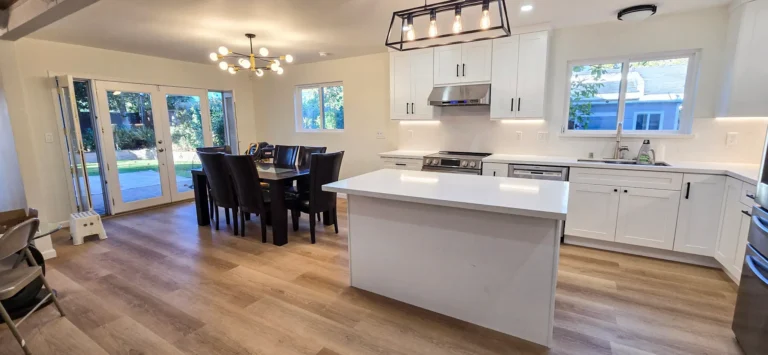

Home Addition vs ADU: Which Is Better for You?
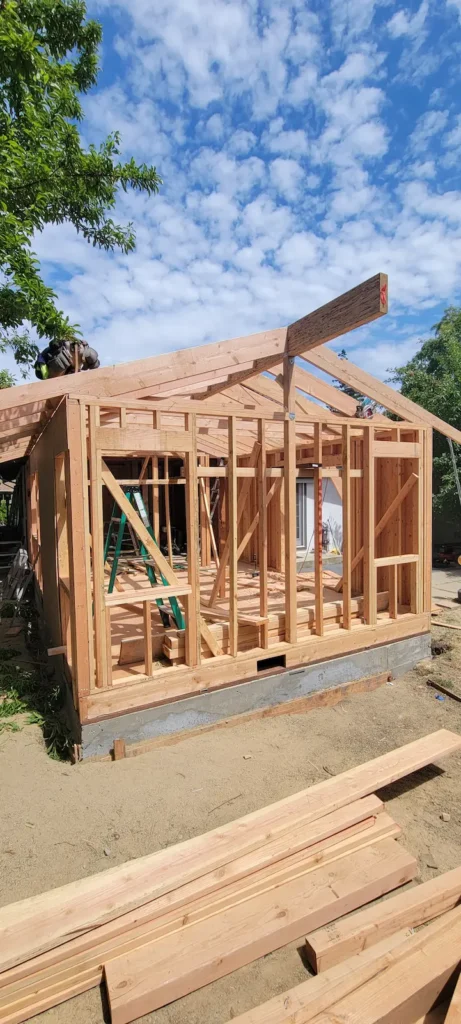
The Home Addition vs ADU Question Bay Area Homeowners Are Asking
Home addition vs ADU is one of the most common questions Bay Area homeowners ask when they need more space. Both options add square footage, both increase your home’s value, and both require professional construction and permitting. But they serve very different purposes, come with very different costs, and make sense for very different situations.
If you’re trying to decide between a home addition and an ADU for your Bay Area property, this guide will walk you through everything you need to know to make the right decision for your family, your lifestyle, and your budget.
What Is a Home Addition?
A home addition is an expansion of your existing home’s footprint or floor plan. It connects directly to your main living space and becomes a permanent, integrated part of your home. Common types of home additions include:
Room Additions Adding a new bedroom, bathroom, family room, or office that connects directly to your existing home.
Second Story Additions Building an entirely new floor on top of your existing single-story home, dramatically increasing square footage without expanding your property’s footprint.
Bump-Out Additions Smaller expansions that extend an existing room by a few feet, typically used to enlarge a kitchen, master bathroom, or bedroom.
Garage Conversions to Living Space Converting an attached garage into livable square footage, such as a family room, bedroom, or home office.
Sunroom or Enclosed Patio Adding a glass-enclosed living space that bridges indoor and outdoor living.
Home additions are fully integrated into your existing home. They share the same address, utilities, HVAC systems, and living spaces as the rest of your house.
What Is an ADU?
An Accessory Dwelling Unit, commonly called an ADU, is a separate, self-contained living space on your property. Unlike a home addition, an ADU has its own kitchen, bathroom, and living area, making it a fully independent unit.
Common types of ADUs include:
Detached ADU A completely separate structure built in your backyard, such as a cottage, guest house, or casita.
Attached ADU A unit connected to your main home but with its own separate entrance, kitchen, and living space.
Garage Conversion ADU An existing detached or attached garage converted into a fully functional living unit.
Junior ADU (JADU) A smaller ADU (under 500 square feet) created within your existing home’s footprint, typically from a bedroom and bathroom with a small kitchenette added.
ADUs have become increasingly popular throughout the Bay Area thanks to California legislation that has streamlined the permitting process and reduced fees, making them more accessible and affordable than ever before.
Home Addition vs ADU: Key Differences
Before diving into which is better for your specific situation, it helps to understand the fundamental differences between the two options.
Purpose and Use
Home Addition: Expands your personal living space. The new space becomes part of your home and is used by you and your family. A home addition is ideal when you simply need more room, whether that’s an extra bedroom for a growing family, a larger kitchen, or a dedicated home office.
ADU: Creates a separate, independent living unit. The ADU can be used for rental income, housing a family member who wants privacy and independence, or as a standalone space that serves a specific purpose (home office, studio, guest quarters).
Financial Considerations
Home Addition: Increases your home’s square footage and value but does not generate income. The financial return comes entirely at resale.
ADU: Can generate significant rental income ($2,000 to $3,500 per month in the Bay Area) while also increasing your home’s value. The ADU essentially pays for itself over time through rental income.
Privacy and Independence
Home Addition: Fully integrated with your living space. Family members share common areas, entrances, and utilities.
ADU: Completely private and independent. Tenants, family members, or guests have their own entrance, kitchen, and bathroom, with no need to enter the main house.
Home Addition vs ADU: Cost Comparison
Cost is one of the most important factors in the home addition vs ADU decision. Both options represent significant investments, but their cost structures are quite different.
Which Costs More?
In most cases, a home addition and a similarly sized ADU cost roughly the same per square foot. However, because ADUs require a full kitchen, bathroom, and utility hookups, they often cost more than a simple room addition of the same size.
That said, the ADU’s ability to generate rental income fundamentally changes the financial equation. An ADU that costs $200,000 to build but generates $2,500 per month in rent will pay for itself in approximately 6 to 7 years. A home addition of the same cost generates no ongoing income.
Home Addition vs ADU: Which Adds More Home Value?
Both home additions and ADUs increase your property’s value, but they do so in different ways.
Home Addition Value
A home addition increases your home’s value by adding livable square footage. In the Bay Area, each additional square foot of living space typically adds $400 to $700 in home value, depending on location, quality of construction, and the type of addition.
A 400 square foot addition might add $160,000 to $280,000 in home value, which often (but not always) exceeds the construction cost.
ADU Value
ADUs increase home value in two ways. First, they add livable square footage just like a home addition. Second, they are recognized by appraisers and buyers as income-generating assets, which typically commands a premium above and beyond the simple square footage addition.
In the East Bay, a well-built ADU can add $150,000 to $300,000 or more to your home’s value. Homes with ADUs also tend to sell faster in the Bay Area market because buyers recognize their income potential.
The Verdict on Value
For pure resale value, ADUs often have the edge in the Bay Area real estate market because of their income-generating potential. However, if you’re adding space that significantly improves your daily life (a larger kitchen, a master suite, a family room), the quality of life value of a home addition can be equally important.
Home Addition vs ADU: Permitting and Timeline
Both home additions and ADUs require permits in the Bay Area, but the permitting landscape for each is quite different.
Home Addition Permitting
Home additions require building permits, which involve plan review, structural engineering, and inspections. The permitting process typically takes:
Standard Room Addition: 6 to 12 weeks for permit approval Second Story Addition: 8 to 16 weeks for permit approval Complex Additions: Up to 6 months in some Bay Area cities
Home additions may also trigger requirements to upgrade existing systems (electrical panels, HVAC, plumbing) to current code standards.
ADU Permitting
California has made significant changes to ADU permitting laws in recent years. Key improvements include:
Streamlined Review: Cities must approve or deny ADU permits within 60 days Reduced Fees: Impact fees are waived for ADUs under 750 square feet Pre-Approved Plans: Many Bay Area cities offer pre-approved ADU plan sets that dramatically speed up the process Ministerial Approval: Most ADUs are approved ministerially (without discretionary review), meaning neighbors cannot easily block your ADU
Thanks to these legislative changes, ADU permitting in the Bay Area is generally faster and more predictable than home addition permitting.
Construction Timeline
Home Addition: 3 to 6 months for construction, depending on scope ADU: 4 to 8 months for construction, including permitting
Home Addition vs ADU: Which Is Right for You?
Now that we’ve covered the key differences, costs, value, and permitting, let’s look at which option makes the most sense for different situations.
Choose a Home Addition If:
You Need More Family Living Space If your family is growing and you simply need more bedrooms, a larger kitchen, or additional common areas that connect to your existing home, a home addition is the right choice. The new space integrates seamlessly with your existing home and improves daily life for everyone in the household.
You Want a Dedicated Home Office If you work from home and need a professional, dedicated workspace separated from family activity but still connected to your home, a home addition or bump-out addition is ideal.
Your Lot Cannot Accommodate a Separate Structure Some lots, particularly in denser Bay Area neighborhoods, may not have enough space for a detached ADU. In these cases, a home addition or attached ADU may be the only option.
You Plan to Sell in the Near Future If you plan to sell within 3 to 5 years, a home addition that significantly improves your home’s livability and square footage may be a better investment than an ADU, which takes longer to fully appreciate through rental income.
You Want a Seamless, Integrated Look Home additions, when done well, look like they were always part of the original house. If aesthetic integration is important to you, a home addition may be the better choice.
Choose an ADU If:
You Want to Generate Rental Income If generating passive income from your property is a priority, an ADU is the clear winner. A well-priced ADU in the Bay Area can generate $2,000 to $3,500 per month, significantly offsetting your mortgage or building long-term wealth.
You Have Aging Parents or Adult Children An ADU is perfect for multigenerational living situations where family members want to be close but still maintain their independence. Your parents get their own kitchen, bathroom, and entrance while remaining just steps away from the main house.
You Want Maximum Flexibility An ADU can serve as a rental today, a home for a family member in five years, and a downsizing option for you in twenty years. The flexibility to change how the space is used over time is a major advantage.
Your Lot Has Usable Backyard Space If you have a backyard that isn’t being fully utilized, a detached ADU makes excellent use of that space while adding significant value.
You Want to Maximize Long-Term ROI Over a 10 to 20 year horizon, an ADU that generates ongoing rental income will almost always outperform a home addition in terms of total financial return.
When Both Options Work:
Some homeowners find that an attached ADU, which adds square footage connected to the main house but with its own entrance, offers the best of both worlds. You get additional square footage integrated with your property, the option to use it as rental income or personal space, and the flexibility to convert it to integrated living space in the future if needed.
Home Addition vs ADU: A Quick Comparison
Purpose: Home Addition: Expands personal living space ADU: Creates independent separate living unit
Best For: Home Addition: Growing families, more personal space ADU: Rental income, multigenerational living, flexibility
Rental Income: Home Addition: None ADU: $2,000 to $3,500 per month in Bay Area
Cost Range (Bay Area): Home Addition: $80,000 to $500,000 plus ADU: $80,000 to $400,000
Permitting: Home Addition: Standard building permits, 6 to 16 weeks ADU: Streamlined by California law, 4 to 10 weeks
Timeline: Home Addition: 3 to 6 months construction ADU: 4 to 8 months construction
Home Value Impact: Home Addition: Adds value based on square footage ADU: Adds value based on square footage plus income potential
Privacy: Home Addition: Integrated with main home ADU: Fully independent with separate entrance
Working with Lions Gate Remodeling
At Lions Gate Remodeling, we specialize in both home additions and ADU construction throughout the Bay Area. Whether you’re leaning toward a home addition vs ADU, or you’re still weighing your options, our team can help you evaluate your property, your goals, and your budget to make the right decision.
We handle every aspect of your project, from initial design and permitting through construction and final inspections. Our experience with Bay Area building codes, local permit requirements, and the architectural styles common throughout the region means your project will be completed efficiently, correctly, and to the highest standards of craftsmanship.
Ready to explore your options? Contact us today for a free consultation. We’ll visit your property, discuss your goals, and give you an honest assessment of whether a home addition or ADU is the better fit for your situation.
Final Thoughts
The home addition vs ADU decision ultimately comes down to what you need your space to do. If you need more room for your family and want space that integrates seamlessly with your existing home, a home addition is the right choice. If you want flexibility, rental income potential, or a private space for family members, an ADU is almost certainly the better investment.
In many cases, the best answer depends on your specific property, your financial goals, and how long you plan to stay in your home. That is why working with an experienced Bay Area contractor who can evaluate your specific situation is so valuable.
Both home additions and ADUs are smart investments in the Bay Area real estate market. The key is choosing the one that aligns with your goals and maximizes the potential of your specific property.
Schedule a Free Home Addition or ADU Consultation Let’s evaluate your property and help you decide which option is right for you.
Call: (510)910-0139 Email: Office@Lionsgateremodeling.com