
How Long Does a Master Bathroom Remodel Take in Walnut Creek, CA?
Most homeowners want a number, so here it is: a master bathroom remodel in Walnut Creek typically takes about 4 to 8 weeks of construction, plus a few weeks of design, ordering, and city review before work starts. Start to finish, plan on roughly 1-3 months with 4-8 being the actual time of the bathroom being under construction. The construction is only one piece of that, and the rest is where schedules usually slip.
Below is a realistic breakdown of each phase, what Walnut Creek requires, and what can add time.
Master Bathroom Remodel in Walnut Creek: The Short Answer
These are typical ranges, not guarantees. Your timeline depends on the size of the room, how much you change the layout, the tile being used, if electric or plumbing are being moved and how quickly decisions get made.
| Phase | Typical time |
|---|---|
| Design and selections | 1 to 3 weeks |
| Permit and plan review | Varies by project |
| Ordering materials | 2 to 8 weeks (overlaps other phases) |
| Construction | 4 to 8 weeks |
| Final inspection and punch list | A few days to 1 week |
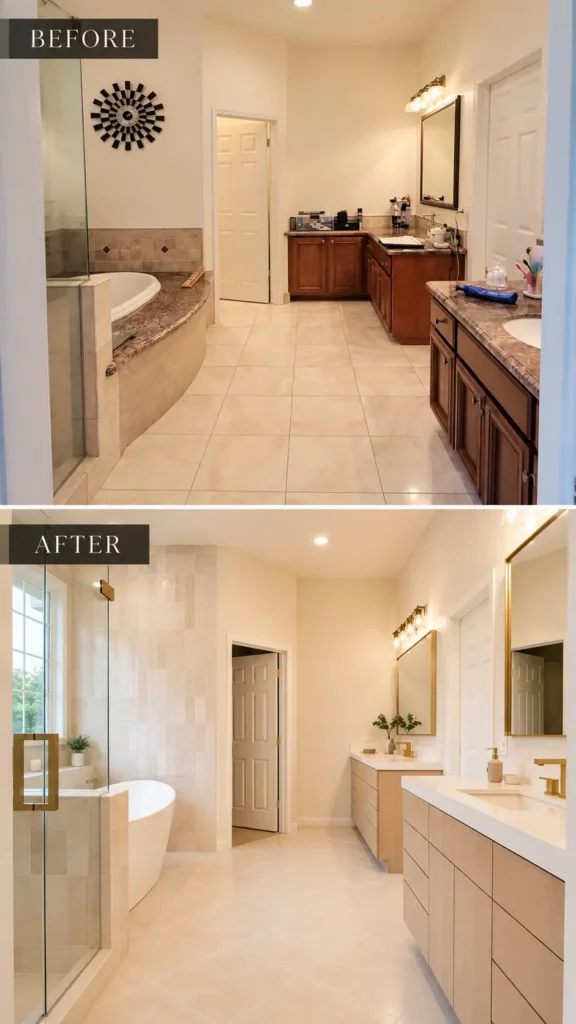
A like-for-like update that keeps the same layout sits at the short end. Moving the shower, adding a freestanding tub, or relocating plumbing pushes you toward the long end.
Phase 1: Design and Selections
A master bathroom has more decisions than almost any other room: shower or tub, single or double vanity, tile, glass, lighting, heated floors, and storage. Each choice affects the plans and the order dates.
Plan on 1 to 3 weeks to settle the layout and pick fixtures. Finishing this phase before you apply for permits is the single best way to keep the project on schedule, because changes after construction starts cost both time and money.
Phase 2: Permits and City Review in Walnut Creek
Most master bathroom projects involve plumbing and electrical work, which means a building permit. Walnut Creek accepts permit applications only through its online portal, and applications received on or after January 1, 2026 must follow the 2025 California codes.
Smaller residential remodels valued at $25,000 or less may qualify for over-the-counter permits, which can move quickly. Many full master bathroom remodels cost more than that, so plan for plan review and the chance of correction comments from the city.
Interior-only work generally does not need Design Review. If you want to change a window or anything else that alters the outside of the house, the city requires Design Review approval before a building permit, and its timing varies. You can read the city’s design review requirements before you start.
The Building Division also offers expedited plan review for an added fee. Its posted turnaround for residential alterations is 10 business days for the first review and 5 for rechecks. It applies only to the Building Division and is at the Building Official’s discretion. Our guide to Bay Area remodeling permits covers the process in more detail.
Phase 3: Ordering Materials
This phase overlaps with design and permitting, and it is where good contractors save time. Vanities, specialty tile, freestanding tubs, and plumbing fixtures can take several weeks to arrive. Custom shower glass is usually measured after the tile is set, so it is ordered late and can add a week or more at the end.
Order long-lead items as soon as your selections are final, and avoid changing them afterward.
Phase 4: Construction, Step by Step
Here is what the 4 to 8 weeks usually looks like:
- Demolition (2 to 4 days). The old fixtures, tile, and flooring come out.
- Rough framing, plumbing, and electrical (1 to 2 weeks). Walls are adjusted and new lines are run, followed by a city inspection.
- Waterproofing and prep (less than a week). The shower is waterproofed and given time to cure before tile goes on.
- Tile (1 week). Shower walls, floors, and any niches or benches are set and grouted.
- Vanity, fixtures, and finishes (1 to 2 weeks). Cabinets, counters, lighting, mirrors, and paint go in.
- Glass, final inspection, and punch list. Shower glass is installed, the city does a final inspection, and small items are corrected.
Because inspections must pass before work moves forward, the schedule is tied to the city as well as the crew. If you will be using the house during construction, our tips on remodeling while you live there can help.
What Can Slow Down a Master Bathroom Remodel in Walnut Creek?
These are the most common causes of delay:
- Hidden conditions. Older homes can hide water damage, rot, or outdated plumbing behind the walls.
- Layout changes. Moving plumbing or relocating a shower takes more work than keeping it in place.
- Change orders. New requests midstream mean new pricing, materials, and sometimes revised plans.
- Backordered items. One missing fixture or tile can stall the whole room.
- Permit corrections. Incomplete plans can trigger another round of review.
A good contractor will build some cushion into the schedule and explain it up front.
How to Keep Your Project on Schedule
- Finalize your design and selections before permits are submitted.
- Order long-lead items early.
- Choose one decision-maker and respond quickly to questions.
- Ask for a written schedule that includes city inspections.
- Hire a contractor who has pulled permits in Walnut Creek.
If you are comparing contractors, our list of questions to ask your contractor before signing is a helpful starting point. You can also see our Bathroom Remodeling in Walnut Creek post for more on what homeowners need to know.
Ready to Plan Your Master Bathroom?
If you want a clear, honest timeline for your own master bathroom, Lions Gate Remodeling can walk through your space, outline each phase, and give you a realistic schedule. Contact us to book a consultation OR reach out for a link to our online bathroom estimate portal! Our online portal takes about 15 minutes to fill out and all you need is a tape measurer and smart phone!