
How to Finance a Remodel: 7 Bay Area Options Compared
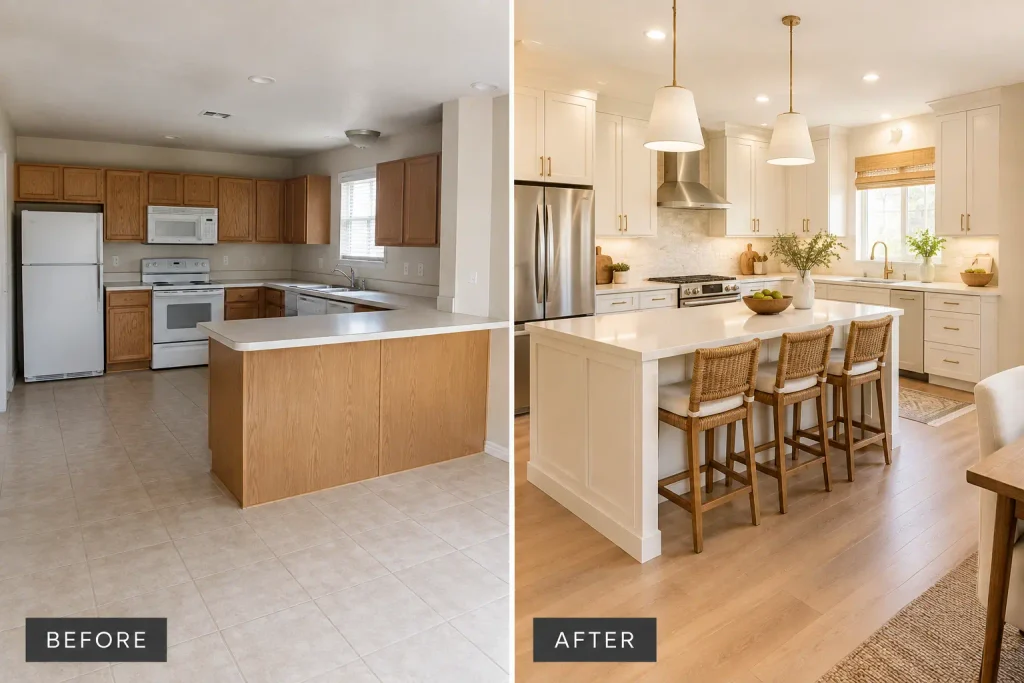
If you’re wondering how to finance a remodel, you’re in good company. In the East Bay, a kitchen or bathroom project can easily run into the tens of thousands, and a whole-home renovation or addition can climb far higher. Most homeowners don’t write that check from savings, and they don’t have to.
The right financing depends on how much you need, how much equity you have, how fast you need funds, and how you feel about interest rate risk. Here are seven common options, what each is best for, and how to choose.
First, Know Your Number
Before comparing loans, get a realistic budget. Financing a vague estimate is how homeowners end up short halfway through a project. Work from a detailed written bid, and add a contingency of 10 to 20 percent for surprises, which are common in older Bay Area homes with hidden plumbing, wiring, or structural issues. Our Home Remodel Checklist: 10 Things to Do Before You Start walks through what to settle before you begin.
It also helps to know what you’re likely to get back. Our guide to East Bay remodeling ROI covers which projects tend to hold their value, so you can decide how much borrowing makes sense.
1. Cash or Savings
Paying cash means no interest, no fees, and no lender approval. The tradeoff is liquidity. Draining your emergency fund for a remodel leaves you exposed if something else goes wrong. A common middle path is to use savings for part of the project and finance the rest.
Best for: smaller projects, or homeowners with a healthy cushion left over.
2. Home Equity Line of Credit (HELOC)
A HELOC works like a credit card secured by your home. You’re approved for a limit, draw funds as you need them, and typically pay interest only on what you’ve used. Most HELOCs have variable rates, so your payment can rise or fall over time.
That flexibility suits remodels, where costs arrive in stages. The risk is rate movement, plus the fact that your home secures the debt. The Consumer Financial Protection Bureau has a plain-language overview of how HELOCs and home equity loans work.
Best for: phased projects and homeowners comfortable with a variable rate.
3. Home Equity Loan
A home equity loan is a lump sum with a fixed rate and a fixed monthly payment. It’s a second mortgage, so you keep your existing first mortgage in place. This matters if you locked in a low rate years ago, which many Bay Area homeowners did.
Best for: projects with a well-defined cost and homeowners who want predictable payments.
HELOC vs. home equity loan, in short: choose the HELOC for flexibility and the home equity loan for certainty.
4. Cash-Out Refinance
With a cash-out refinance, you replace your current mortgage with a larger one and take the difference in cash. It can make sense if current rates are lower than yours, but if your existing rate is lower than today’s, you’d be raising the rate on your entire balance to fund one project. Closing costs also apply.
Best for: homeowners whose current mortgage rate is higher than what they can get today.
5. Renovation Loans (FHA 203(k) and HomeStyle)
Renovation loans roll the purchase or refinance and the remodel into a single mortgage, and they can be based on the home’s value after improvements. The FHA 203(k) program and Fannie Mae’s HomeStyle are the best-known options. They come with more paperwork, inspections, and requirements that the work be done by qualified contractors, and funds are typically released in stages.
Best for: buyers purchasing a fixer-upper, or owners with limited equity who are taking on major work.
6. Personal Loans
Personal loans are unsecured, so your home isn’t collateral. Funding can be fast, often within days, and there’s no appraisal. In exchange, interest rates are usually higher than equity-based options and terms are shorter, so monthly payments run higher.
Best for: smaller projects, newer homeowners without much equity, or anyone who doesn’t want to borrow against their home.
7. Retailer and Supplier Financing for Finish Materials
Even if you fund the main project another way, you may be able to finance the finishes separately. Many cabinet, flooring, tile, appliance, lighting, and plumbing fixture retailers offer their own store credit cards or financing plans through third-party lenders, often with promotional periods. This can help you spread out big-ticket selections like cabinetry, countertops, or a full appliance package without borrowing more than you need against your home.
Read the terms carefully. Deferred-interest offers can charge interest retroactively on the full original amount if you don’t pay the balance in full by the deadline. Store cards also tend to carry high standard rates once the promotion ends, so only use one if you’re confident you’ll pay it off in time. Compare it against your other options, since a HELOC or home equity loan may cost less over the long run.
Before you buy, talk with your contractor about how ordering will work. Lead times, delivery timing, who receives and inspects materials, and how returns or damaged items are handled can all affect your schedule and budget. Getting everyone aligned up front avoids surprises once the project is underway.
Best for: financing specific finish selections in stages, especially when a retailer offers a promotion you can realistically pay off in time.
Bay Area Considerations
Equity is your biggest asset. Many local homeowners have substantial equity, which makes HELOCs and home equity loans easier to qualify for than in many parts of the country. Lenders will still look at your credit, income, and total debt.
Property taxes. California’s Proposition 13 limits how your assessed value rises, but adding square footage can trigger a reassessment of the new construction. Talk to a tax professional before a large addition or ADU. Our comparison of a home addition vs. ADU covers how those projects differ.
Permits affect lending. Lenders and appraisers may care whether work was permitted. Un-permitted work can complicate a refinance or a future sale, so read our https://lionsgateremodeling.com/bay-area-remodeling-permits-a-homeowners-guide-to-codes-and-hiring-a-licensed-contractor/ before you begin.
How to Finance a Remodel: Which Option Fits You?
Ask yourself four questions:
- How much do I need, and is the cost fixed? A fixed cost points to a home equity loan; an uncertain or phased cost points to a HELOC.
- What’s my current mortgage rate? If it’s low, avoid a cash-out refinance and keep your first mortgage.
- How much risk can I take on? Fixed rates give certainty; variable rates give flexibility with some risk.
- Am I comfortable using my home as collateral? If not, look at personal loans or retailer financing for smaller purchases.
Then compare offers from at least two or three lenders. Look at the APR, fees, prepayment penalties, and what happens if rates rise.
Protect Yourself as You Pay
Financing is only half the picture. How you pay your contractor matters too.
- Get a written contract with a clear scope, schedule, and payment plan tied to progress.
- Watch the down payment. California law limits the down payment on a home improvement contract to a small percentage of the job (currently 10% or $1,000, whichever is less), so be wary of anyone asking for much more upfront.
- Verify the license on the California Contractors State License Board website.
- Keep records of every payment, change order, and invoice.
For more on vetting a contractor, see our list of questions to ask your contractor before signing.
Frequently Asked Questions
What is the best way to finance a remodel? There’s no single best option. A HELOC suits phased projects, a home equity loan suits fixed-cost projects, and a personal loan suits smaller jobs or homeowners without much equity.
Is a HELOC or a home equity loan better for a home renovation? A HELOC offers flexibility and variable rates, while a home equity loan offers a lump sum and a fixed payment. Choose based on whether your costs are predictable and how you feel about rate changes.
Can I finance a remodel with bad credit? It’s harder, and rates will be higher. Government-backed renovation loans like the FHA 203(k) often have more flexible credit requirements than conventional loans, so it’s worth asking about.
Can I finance cabinets, flooring, or appliances separately from the remodel? Often, yes. Many retailers and suppliers offer store financing or credit cards for finish materials. Watch for deferred-interest promotions, make sure you can pay the balance before the promotional period ends, and coordinate ordering and delivery with your contractor.
Ready to Plan Your Project?
Knowing your numbers makes financing easier. If you’re planning a kitchen, bathroom, addition, or ADU in the East Bay, contact Lions Gate Remodeling for a detailed estimate you can take to any lender.
This article is for general information and isn’t financial or legal advice. Rates, programs, and rules change, so confirm current terms with a licensed lender or tax professional.